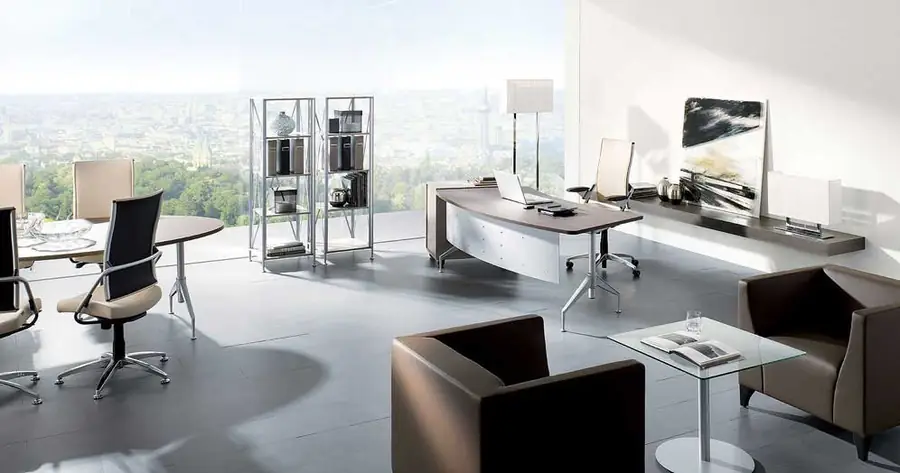
Fit the desk to the work
A laptop-only setup needs less depth than multiple monitors, drawings or paperwork. Choose enough surface area for the real work and preserve circulation rather than defaulting to the largest desk that fits.
Treat the chair as equipment
An attractive chair that causes discomfort is not a successful office choice. Adjustability, support and seat height matter, especially for long work sessions. Decorative guest seating can be a separate decision.
Control cables and visual noise
Power bars, chargers and cables can quickly make an office look unfinished. Plan outlets, grommets, trays or concealed routing before placing furniture permanently.
Make storage match frequency
Daily files and tools belong within reach. Archives and occasional supplies can move higher or farther away. This keeps the desk clear while reducing unnecessary movement during work.
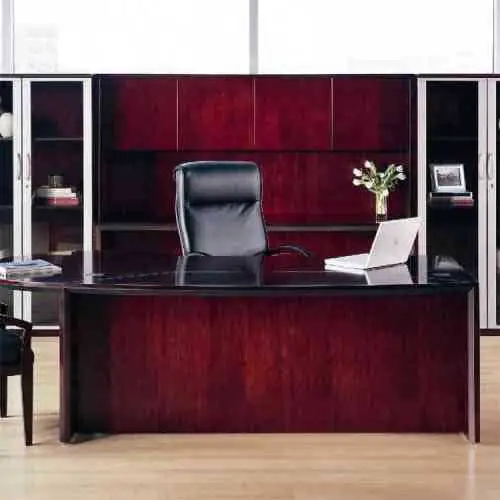
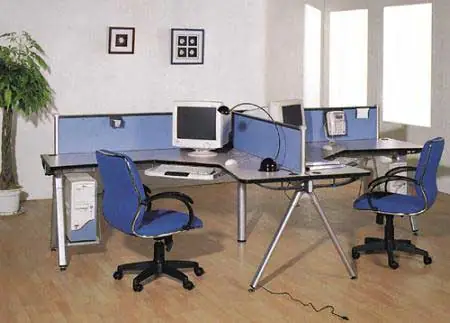
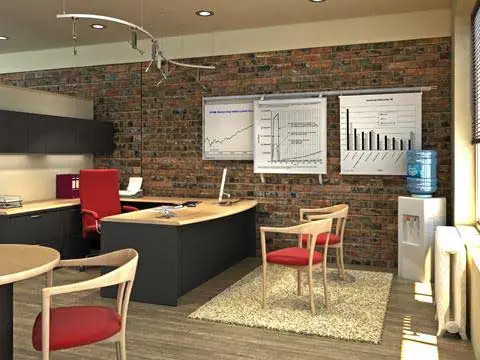
Plan the workstation around screen, light and reach
Desk depth should accommodate the monitor distance, keyboard position and any paperwork used regularly. Place screens to reduce glare from windows rather than relying on brighter displays, and keep frequently used storage within an easy seated or standing reach. A beautiful desk setup loses value quickly if the body is constantly twisting or reaching.
For shared rooms, closed storage can help the office disappear visually after work hours. In a dedicated office, more open storage may be practical because files and tools can stay accessible.
How to use inspiration images
Save images for a specific reason rather than only because you like the overall room. Notice the proportion of furniture, the amount of contrast, the placement of lighting and how much open space is left around objects. Those relationships transfer more reliably to another home than copying individual products.
Before buying anything, compare the idea with your own dimensions, daylight and routines. Decoration becomes more coherent when every new piece solves an actual need or reinforces an existing visual direction.