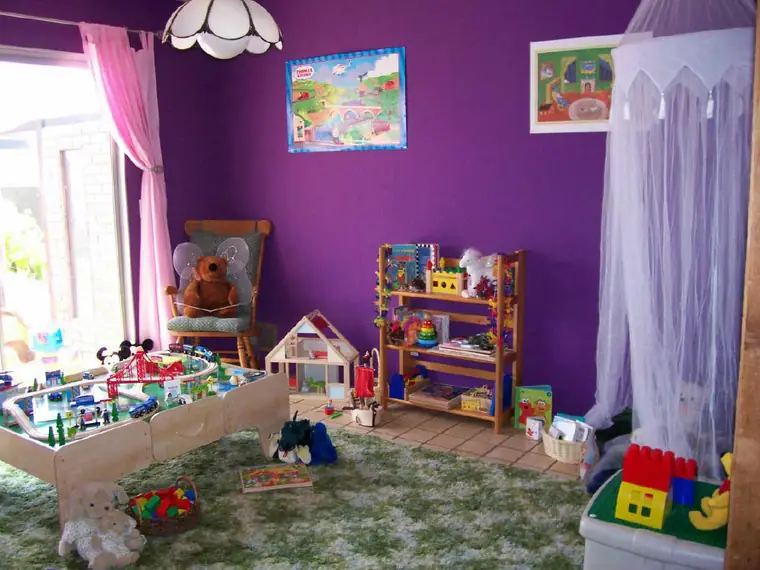
Build the room around changing needs
Choose durable furniture and a simple wall treatment before committing to a narrow theme. Bedding, art, decals and smaller accessories can express current interests without forcing a complete redesign every few years.
Make storage visible and reachable
Low shelves, baskets and labeled bins help children participate in keeping the room organized. Closed storage is useful for visual calm, but some open storage makes favourite books and toys easier to use.
Create zones without crowding
A rug can define play space, a small desk can establish a work area and a reading light can turn one corner into a quiet zone. These cues work even in modest rooms without adding walls or bulky dividers.
Design for safety as well as style
Anchor tall furniture, manage cords, keep climbing hazards in mind and choose age-appropriate lighting. Decoration should never make the room harder to supervise or move through.
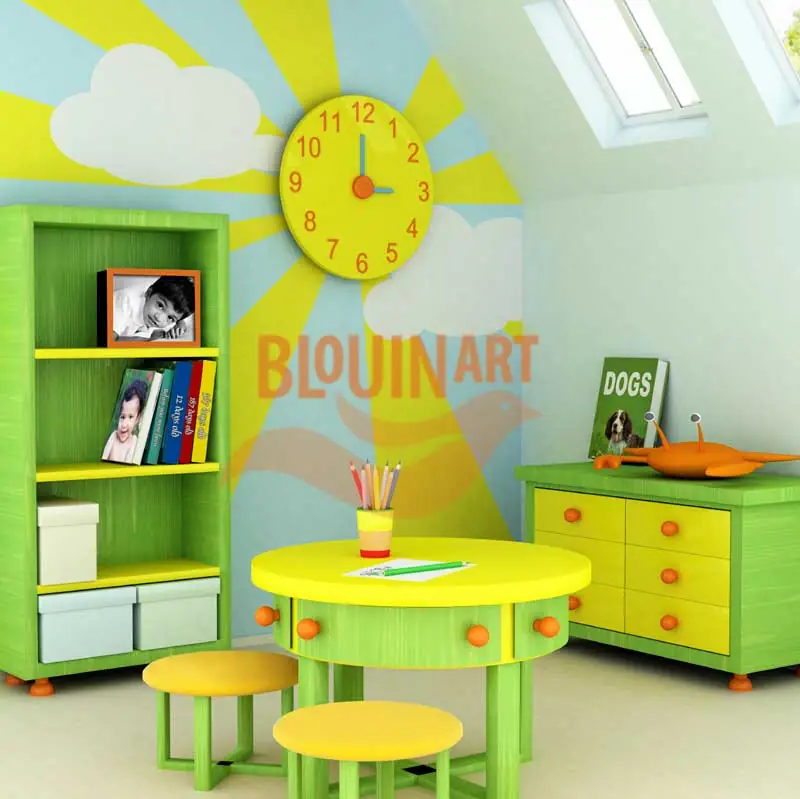
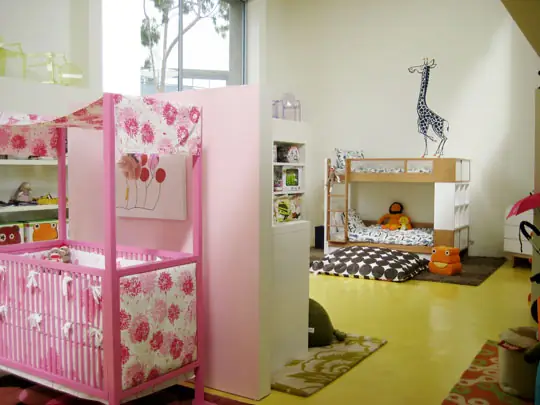
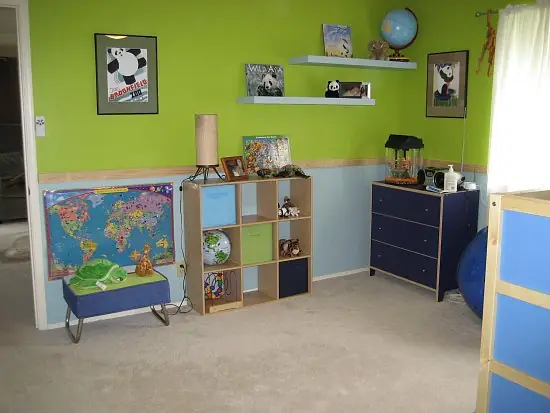
Create zones that can change as the child grows
Rather than designing around a single age, separate the room into sleep, storage, play and eventually study zones. Furniture with simple shapes and neutral major finishes can stay useful while bedding, art and smaller accessories change more easily. This reduces the need to replace the entire room whenever interests shift.
Keep frequently used storage at child height where appropriate, and secure tall furniture to the wall. Good room design should support independence without sacrificing safety.
How to use inspiration images
Save images for a specific reason rather than only because you like the overall room. Notice the proportion of furniture, the amount of contrast, the placement of lighting and how much open space is left around objects. Those relationships transfer more reliably to another home than copying individual products.
Before buying anything, compare the idea with your own dimensions, daylight and routines. Decoration becomes more coherent when every new piece solves an actual need or reinforces an existing visual direction.