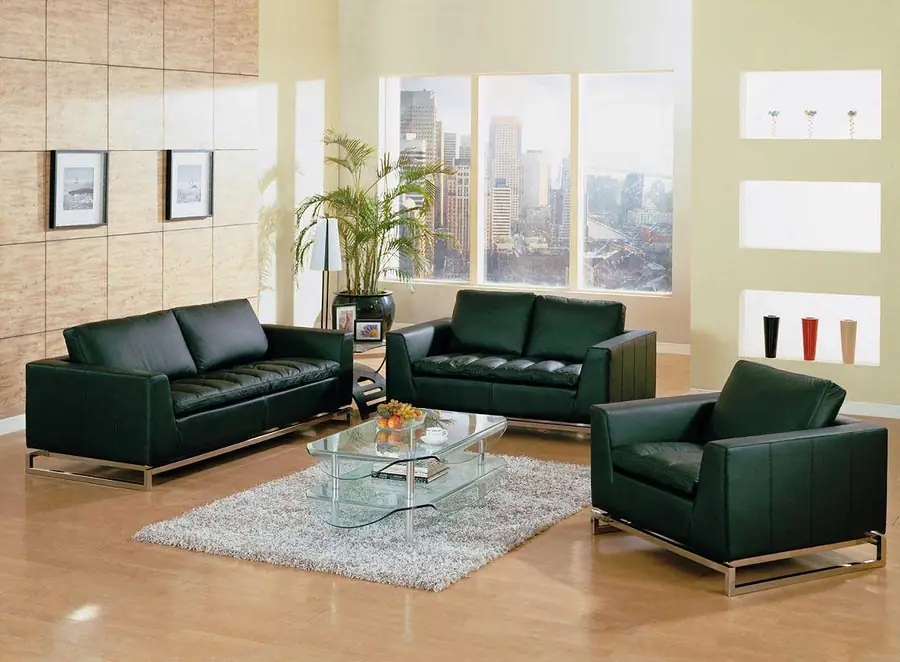
Balance visual weight
Dark leather sofas can dominate a room. Lighter rugs, walls, tables or textiles can create contrast, while slim-legged furniture prevents the overall arrangement from becoming too heavy.
Mix materials deliberately
Leather works well with timber, wool, linen, metal and stone. Repeating the same leather on every seating piece can feel like a showroom set, so consider mixing one leather anchor with complementary upholstered chairs.
Understand finish and maintenance
Protected leather tolerates daily use differently from more natural finishes. Follow the maker’s care instructions and keep pieces away from extreme heat or prolonged direct sunlight where possible.
Let patina develop naturally
Creasing and colour variation can be part of genuine leather’s appeal. A room often feels more relaxed when the material is allowed to age rather than being treated as something that must remain visually untouched.
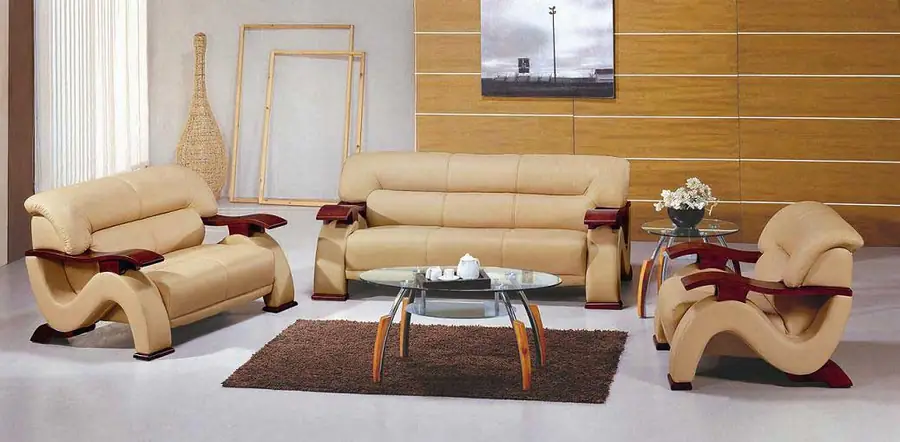
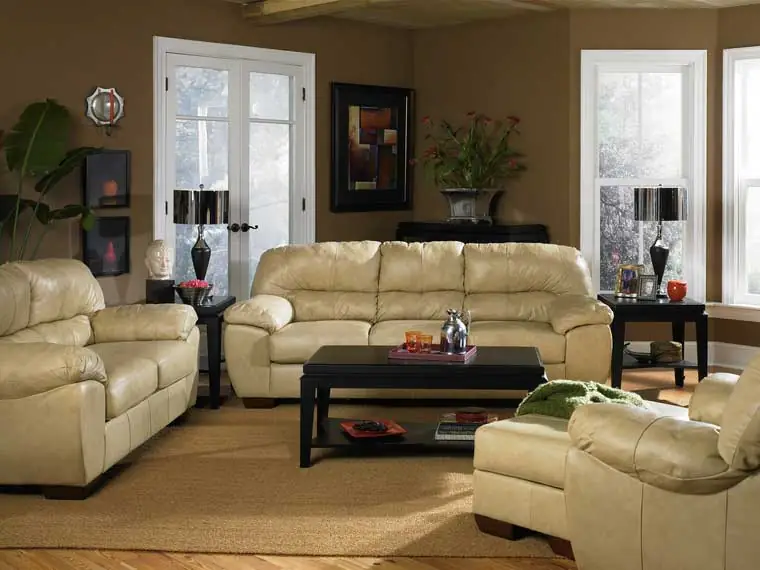
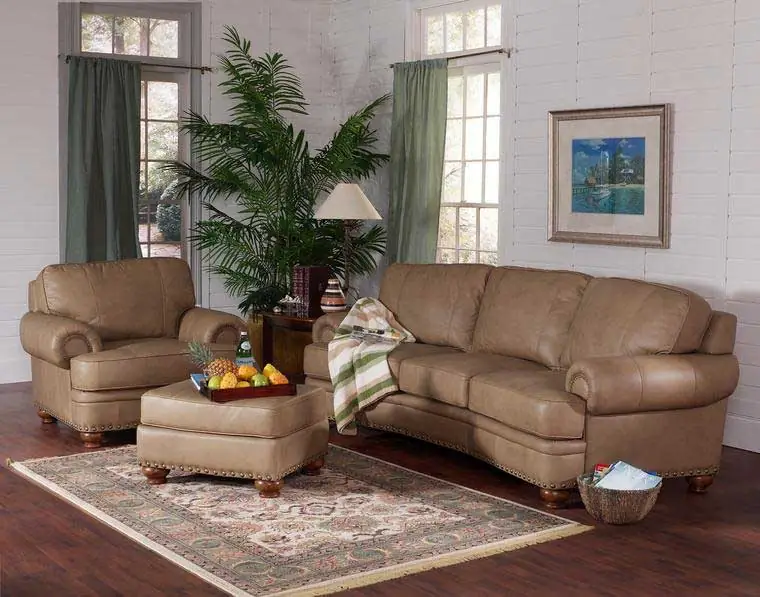
Match the leather type to the household
Not all leather behaves the same way. Protected or pigmented finishes generally tolerate spills and everyday wear better, while aniline and semi-aniline leathers can show natural markings, sunlight exposure and patina more readily. Homes with children, pets or intense direct sun should weigh appearance against maintenance before choosing a delicate finish.
Ask what cleaning products the manufacturer recommends and avoid assuming that household oils or conditioners are suitable. Over-conditioning can darken some leathers or damage protective coatings.
How to use inspiration images
Save images for a specific reason rather than only because you like the overall room. Notice the proportion of furniture, the amount of contrast, the placement of lighting and how much open space is left around objects. Those relationships transfer more reliably to another home than copying individual products.
Before buying anything, compare the idea with your own dimensions, daylight and routines. Decoration becomes more coherent when every new piece solves an actual need or reinforces an existing visual direction.